Atelier 17
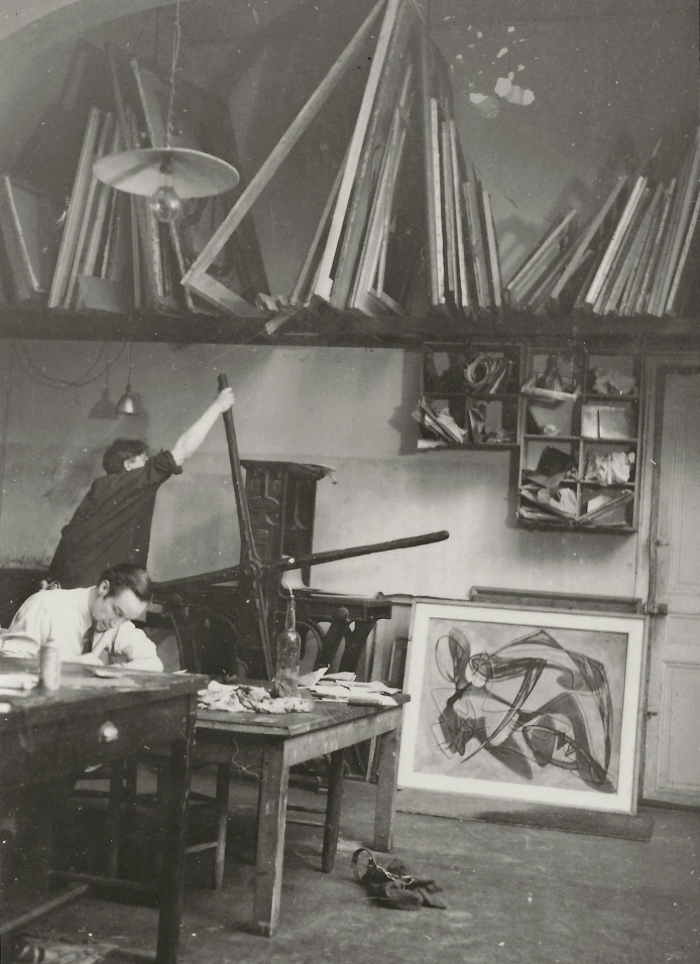
Atelier 17 was a pioneering printmaking workshop founded in 1927 in Paris by Stanley William Hayter. Located in Montparnasse, the atelier became an experimental center for engraving and intaglio techniques, emphasizing collaboration, technical innovation, and the exchange of ideas among artists.
During the 1930s, the workshop attracted a wide range of international artists associated with Surrealism and abstraction, including Joan Miró, Max Ernst, André Masson, and Alberto Giacometti. With the outbreak of the Second World War, Hayter relocated Atelier 17 to New York, where it played a significant role in the development of American printmaking and influenced artists such as Jackson Pollock and Mark Rothko. The atelier returned to Paris in the early 1950s, reestablishing itself as a major center for experimental printmaking.
Within the postwar Paris ecosystem of the livre d’artiste, Atelier 17 occupied a singular position. Unlike workshops such as Atelier Mourlot, Atelier Desjobert, Atelier Lacourière-Frélaut, or Atelier Crommelynck, it did not primarily function as a service atelier producing finished editions for publishers. Instead, it operated as an experimental and pedagogical workshop – a laboratory of intaglio techniques fostering collective experimentation and technical innovation. Its influence on the livre d’artiste was therefore indirect: artists trained or influenced at Atelier 17 often realized their books at other Paris ateliers, particularly Lacourière-Frélaut and Crommelynck.
Post 1945: 14 Rue Hégésippe Moreau, 75018 Paris