L’Imprimerie nationale
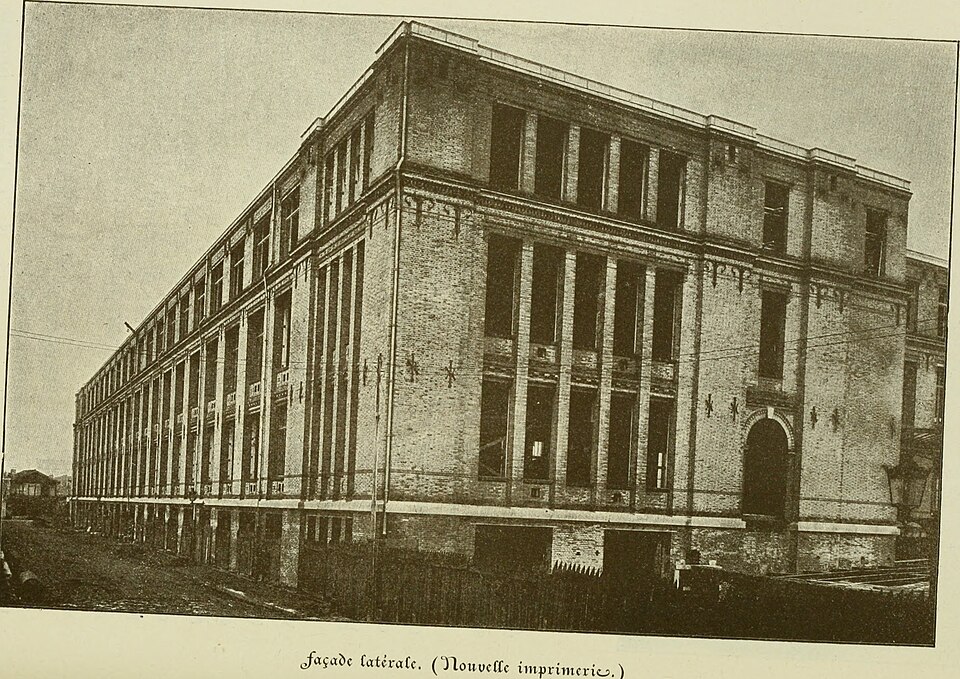
The Imprimerie nationale was established in 1640 under the authority of Louis XIII and later reorganized following the French Revolution as the official state printing house of France. It was responsible for the production of government publications, official documents, and high-quality printed materials, and became renowned for its technical excellence and typographic innovation. In his extensive study, W. J. Strachan points to the centralisation of the French government under Richelieu as having brought institutions like the Imprimerie Nationale to the forefront, elevating the status of fine printmaking since the early seventeenth century.
Throughout the nineteenth and twentieth centuries, the institution maintained advanced printing facilities and developed a high level of craftsmanship in typography, engraving, and book production. In addition to administrative printing, it played a role in the production of fine books, illustrated editions, and printed works requiring exceptional technical precision. Imprimerie nationale undertook specific commissions, particularly for prestigious or institutional projects.
In the postwar period, the Imprimerie nationale formed part of the broader infrastructure of print production in Paris, intersecting with artistic publishing and edition-making, although it did not function as an artist-led collaborative workshop in the same way as private print ateliers.