
Ben Shahn

Ben Shahn

Artists

Active in Paris: 1960

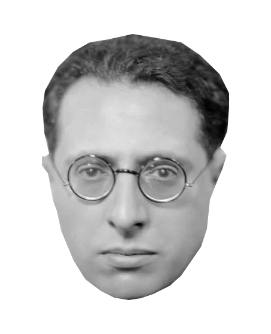
Ben Shahn (1898–1969) was a Lithuanian born American painter, printmaker, photographer, and graphic artist known for combining social realism with a highly personal modernist style. After emigrating to the United States as a child, he became associated with politically engaged art during the 1930s, producing works addressing labour struggles, social injustice, and anti fascism, including murals created for New Deal programs under the Roosevelt administration.

Throughout the postwar period, Shahn expanded his practice across painting, photography, illustration, and artist’s books, developing a visual language that merged expressive line, text, and symbolic imagery. Closely connected to intellectual and literary circles, he collaborated with writers and poets while maintaining a strong commitment to humanist and political themes.

Chase-Riboud’s admiration for the artist Ben Shahn, whose practice, like her own, was grounded in the primacy of ideas over purely visual or formal concerns can be easily explained. Emerging from the socially conscious art movements of the 1930s and 1940s, Shahn treated form as a vehicle for moral and political reflection rather than as an autonomous end. His participation in the United States Pavilion at the Venice Biennale in 1954 has since been understood within the framework of Cold War cultural diplomacy, in which American artistic freedom was positioned in contrast to Soviet Socialist Realism. As Frances K. Pohl has demonstrated, socially engaged realism in the early Cold War operated within a climate shaped by anti-communist suspicion, yet could also be mobilised as evidence of democratic freedom in contrast to Soviet cultural orthodoxy. His line, deliberate and articulate, embodied his belief that visual art could be a language of conviction, capable of communicating intellectual and ethical meaning.


Exhibitions & Events

Musée National d’Art Moderne

  • 12 Peintres et Sculpteurs Américains Contemporains, 1953

    Years: 1953

    The exhibition was one of the earliest institutional presentations of American modern and contemporary art in postwar France. The exhibition signaled a shift in curatorial emphasis by introducing French audiences to artists whose work challenged the aesthetic dominance long associated with the School of Paris.
    Exhibited artist: Jackson Pollock, Ivan Le Lorraine Albright, Arshile Gorky, Stuart Davis, Morris Graves, Edward Hopper, John Kane, John Marin, Ben Shahn, Alexander Calder , Theodore Roszak, David Smith