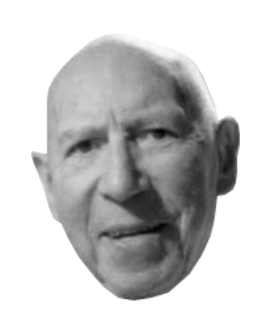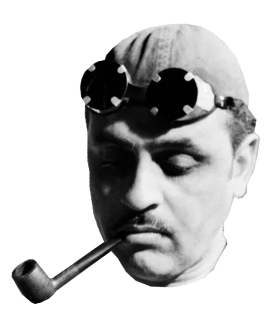
Harold Cousins
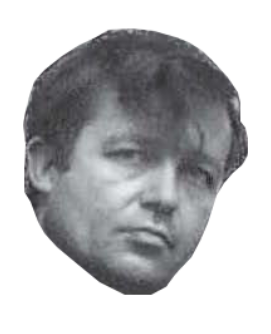
Harold Cousins (1916–1992) was an American sculptor associated with postwar abstraction and direct metal sculpture whose career developed largely in Paris before his later move to Brussels in 1967. In 1949, supported by the GI Bill, he relocated to Paris with his wife Peggy Thomas and joined the studio of Ossip Zadkine in Montparnasse. Paris became central to Cousins’ artistic formation. Immersed in the city’s museums, especially the Louvre and the Musée de l’Homme, he developed a deep interest in African sculpture, material assemblage, and the expressive possibilities of metal. Through fellow expatriate artists including Shinkichi Tajiri, Beauford Delaney, Ed Clark, Herbert Gentry, and Larry Potter, Cousins became part of a vibrant international community of artists working in postwar Paris.
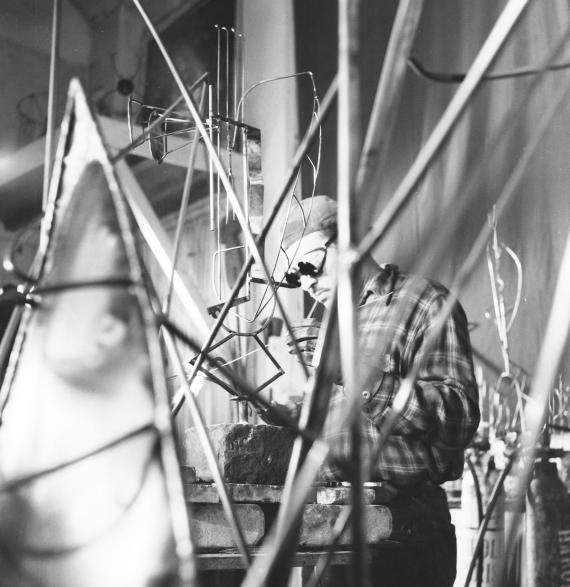
During the early 1950s Cousins turned decisively toward welded steel sculpture after learning oxyacetylene welding from Tajiri, moving away from figurative terracotta and wood toward increasingly abstract “drawings in space” inspired by Julio González. Working with scrap metal gathered from junkyards along the Seine, he developed a sculptural language defined by linear welded forms, shifting spatial relationships, and the interplay of light and shadow.
In 1950 he held his first Paris solo exhibition at Galerie Huit. Throughout the 1950s and 1960s he exhibited regularly at the Salon de la Jeune Sculpture and the Salon des Réalités Nouvelles, while becoming acquainted with figures such as Karel Appel, César, Sonia Delaunay, and Michel Seuphor. Represented by Galerie Raymond Creuze and later Galerie Karl Flinker, Cousins established himself as an important figure within the cosmopolitan abstraction of postwar Paris before relocating to Brussels in 1967.
-
Chez Honey Cafe/Club/Restaurant
-
Galerie Huit Gallery
-
La Coupole Cafe/Club/Restaurant
-
Le Dôme Cafe/Club/Restaurant
-
Le Tabou Cafe/Club/Restaurant
-
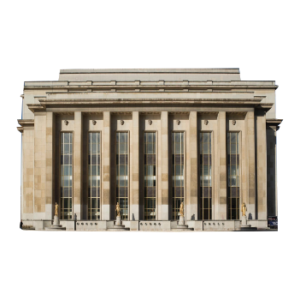 Musée de l’Homme Museum
 -
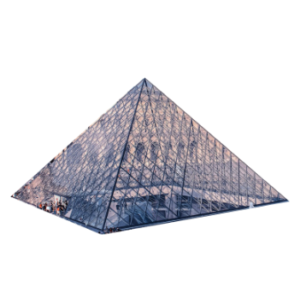 Musée du Louvre Museum
 -
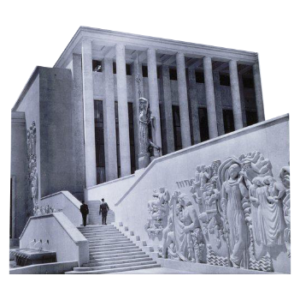 Musée National d’Art Moderne Museum
 -
Salon de la Jeune Sculpture Salon
-
Salon de Mai Salon
-
Salon des Réalités Nouvelles Salon
Artists
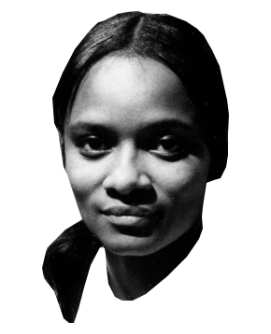
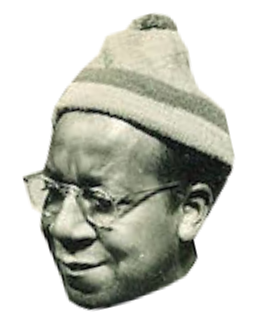
Those of Letters