Salon de Mai
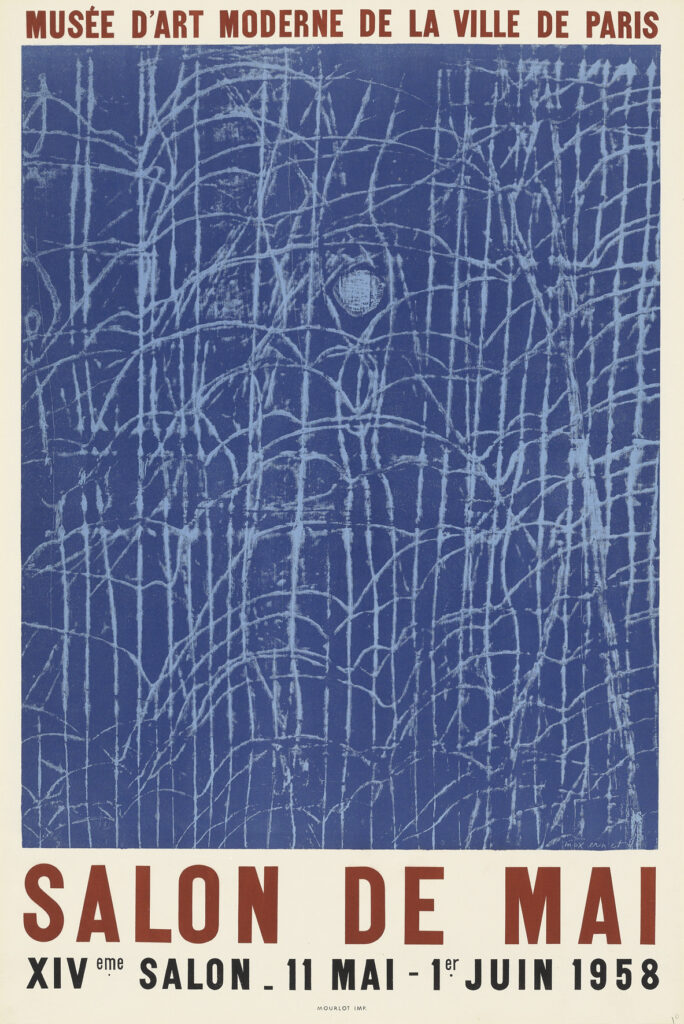
The Salon de Mai was founded in 1943 during the German occupation under the initiative of Gaston Diehl, together with a group of artists and critics committed to defending modern art. Conceived as an act of resistance to both academic conservatism and wartime restrictions, the salon provided a platform for contemporary artistic expression and the re-emergence of the avant-garde in Paris.
Following the Liberation, the salon was reactivated and developed into a recurring exhibition, held in various venues before becoming more regularly associated with the Palais de Tokyo and the Musée d’Art Moderne de la Ville de Paris. During this postwar phase, figures such as Bernard Dorival and Jean Cassou contributed to its intellectual framing and institutional positioning. Their involvement—both linked to museum structures—underscored the Salon’s role in bridging traditions of artistic independence with renewed institutional support.
The salon presented a wide range of contemporary practices, including abstraction and Art Informel, and brought together French and international artists. Participants included major figures of postwar art such as Pierre Soulages, Hans Hartung, Nicolas de Staël, and later Joan Mitchell, who exhibited from 1957 onward.
Closely associated with the emergence of the so-called New School of Paris, the Salon de Mai functioned as a key platform for contemporary painting in the postwar period, particularly in the development and visibility of gestural abstraction and Art Informel. It played an important role in reestablishing Paris as an international center for modern art after the Second World War.
Exhibitions & Events
-
XVIII
6 to 27 May -